 EN
EN
 ES
ES




How to Personalize Corporate T-Shirts: A Guide to Techniques and Pricing
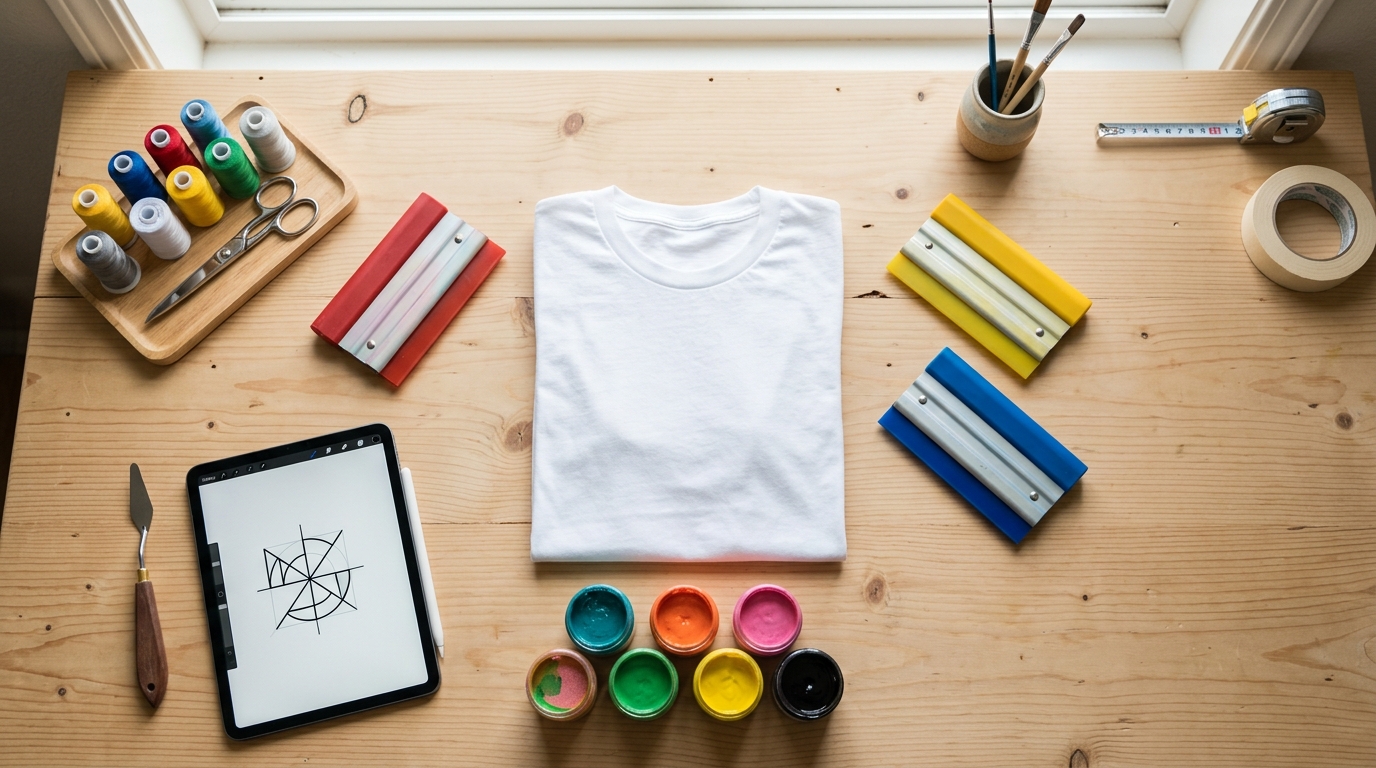
The t-shirt is still the most requested product in corporate merchandise, and that's no accident: it's affordable, useful, and everyone wears one. But personalizing corporate t-shirts isn't a single decision — there are several possible techniques, each with a different price and result depending on the number of colors, the order size, and the fabric type. In this guide we cover every real option we work with at Gurupro — techniques, approximate pricing, lead times, and common mistakes — so you know exactly what to ask for before requesting a quote for custom promotional t-shirts.
Why the t-shirt is still the star product of corporate merchandise
Among all promotional items, the custom t-shirt combines three advantages that few products can match: low unit cost even on medium runs, real utility for the recipient (unlike other gifts that end up in a drawer), and a large print surface that lets a logo read clearly without shrinking it down. That's what makes it the default choice for events, trade fairs, summer campaigns, new-hire welcome packs, and year-end client gifts.
The most common techniques for personalizing corporate t-shirts
Not every printing technique works equally well for every order. These are the four we use most often with B2B clients:
- Screen printing: the most economical option for runs of 50 units or more, with solid colors and great wash durability. Ideal for 1-3 flat-color logos. We cover this technique in detail in our article on what screen printing is and when to use it.
- DTF (digital printing / transfer): allows full-color designs, gradients, and photos, with no minimum-per-color cost. The best option for small runs or highly detailed designs.
- Embroidery: gives a premium finish, especially on polo shirts and sweatshirts. More expensive per unit, but perceived as higher quality.
- Heat transfer vinyl: cut vinyl applied with a heat press. Widely used for names, numbers, or simple designs in short runs.
Approximate pricing for screen-printed and custom t-shirts by order size
The price of a custom t-shirt depends on three factors: the base garment price, the chosen technique, and the number of units. As a general reference:
| Order size | Most cost-effective technique | Approximate personalization cost* |
|---|---|---|
| 1-24 units | DTF / heat transfer vinyl | Flat cost per unit, no screen minimums |
| 25-100 units | Screen printing (1-2 colors) | Screen setup cost amortized; per-unit price drops noticeably |
| 100+ units | Screen printing | Lowest per-unit price of all techniques |
| Any order size, premium look | Embroidery | Higher cost per stitch count; doesn't change with number of colors |
*Exact prices depend on the t-shirt model, design size, and supplier. Request a quote with your logo and quantity for a fixed figure.
How to choose the right technique for your order
Before deciding, answer three questions:
- How many t-shirts do you need? Under 25 units, screen printing almost never pays off compared to DTF.
- How many colors does your design have? With gradients or photos, DTF is the only viable option; with flat colors, screen printing is cheaper on large runs.
- What image do you want to convey? For events and mass gifting, screen printing or DTF. For team uniformity or executive gifts, embroidery gives a more polished finish.
What to consider beyond the technique
- Fabric composition: 100% cotton is the standard for screen printing; technical fabrics (polyester, sports blends) require specific inks.
- Sizing: confirm the size chart before ordering large runs; size-related returns are the most common mistake in corporate orders.
- Lead time: allow extra margin for personalization, especially if the order coincides with a seasonal campaign or a fixed-date event.
- Matching products: many companies pair t-shirts with matching tote bags for welcome packs or event kits.
Most common mistakes when ordering custom promotional t-shirts
After managing hundreds of corporate textile orders, these are the mistakes B2B buyers repeat most often — and they're easy to avoid:
- Not requesting a physical sample before the large run: on-screen color is never a perfect match for the final printed color on fabric; a physical proof avoids surprises.
- Choosing the technique by price alone, ignoring final use: a single-color screen-printed t-shirt may be cheaper, but if the design has gradients it will reproduce poorly — the savings don't make up for the result.
- Underestimating production lead time: ordering "for next week" with no margin forces you to pay rush fees or give up on the ideal technique.
- Not reviewing the design file at high resolution: a low-quality logo shows up far more on textiles than on screen; always send a vector file (AI, EPS, PDF) or a large PNG.
- Leaving the size breakdown until the last minute: this delays production and can force manufacturing in two separate batches.
Custom t-shirts by sector and use case
The ideal t-shirt type and technique change quite a bit depending on what it's for:
- Events and trade fairs: large runs, flat colors, screen printing. Priority: low per-unit cost.
- Hospitality and food service: technical fabrics resistant to frequent washing; often combined with chest embroidery for a more polished look.
- Sports teams or charity runs: breathable technical fabric with DTF or sublimation printing for full-color designs and race numbers.
- Corporate gifts for clients: higher-quality garments (100% combed cotton or premium blend) with embroidery, to convey attention to detail.
- New-hire welcome packs: basic screen-printed t-shirt paired with other pack items, prioritizing tight cost control over medium runs.
"The perfect t-shirt isn't the cheapest or the most expensive one — it's the one that matches your order size, your design, and how the recipient will actually use it."
How to request a custom t-shirt quote, step by step
- Define the quantity and size breakdown, even if it's just an approximate figure.
- Send your logo as a vector file (AI, EPS, or PDF) or, if you don't have one, as the highest-resolution PNG available.
- Specify the number of colors in the design and whether you need the same design in multiple positions (chest, back, sleeve).
- Confirm your deadline so we can recommend a technique compatible with that timeline.
- Review the design proof before approving production — at Gurupro, we never produce an order without this confirmation.
Real use cases at Gurupro
In our corporate t-shirt and textile catalog, we mostly use screen printing for event, trade fair, and seasonal campaign orders, and DTF for short runs or highly detailed full-color designs. For leadership teams or premium gifts, we recommend embroidery on polos and sweatshirts. We've spent more than 20 years helping companies decide which technique fits their budget and timeline, reviewing every design before production.
Frequently asked questions
Where can I get custom promotional t-shirts without sacrificing quality?
What's the minimum order for custom t-shirts?
How long does a custom t-shirt order take?
Can I order different sizes within the same order?
What's the difference between screen printing and DTF for corporate t-shirts?
What logo format do I need to send to personalize t-shirts?
- 21/09/2026
- Original gifts
Share on


