 EN
EN
 ES
ES




Marking Techniques: A Guide to the Main Personalization Techniques
After more than 15 years of experience in the promotional gift sector, the question all our clients ask themselves is: What marking technique should I choose?
You've already chosen the product, we have the approved design, but before you receive your promotional gifts there is one of the most important choices left: the selection of the marking technique.
Our sales team will advise you at all times on which technique is best suited to the chosen product and your needs, but below we leave you a guide to the main techniques used in our sector.
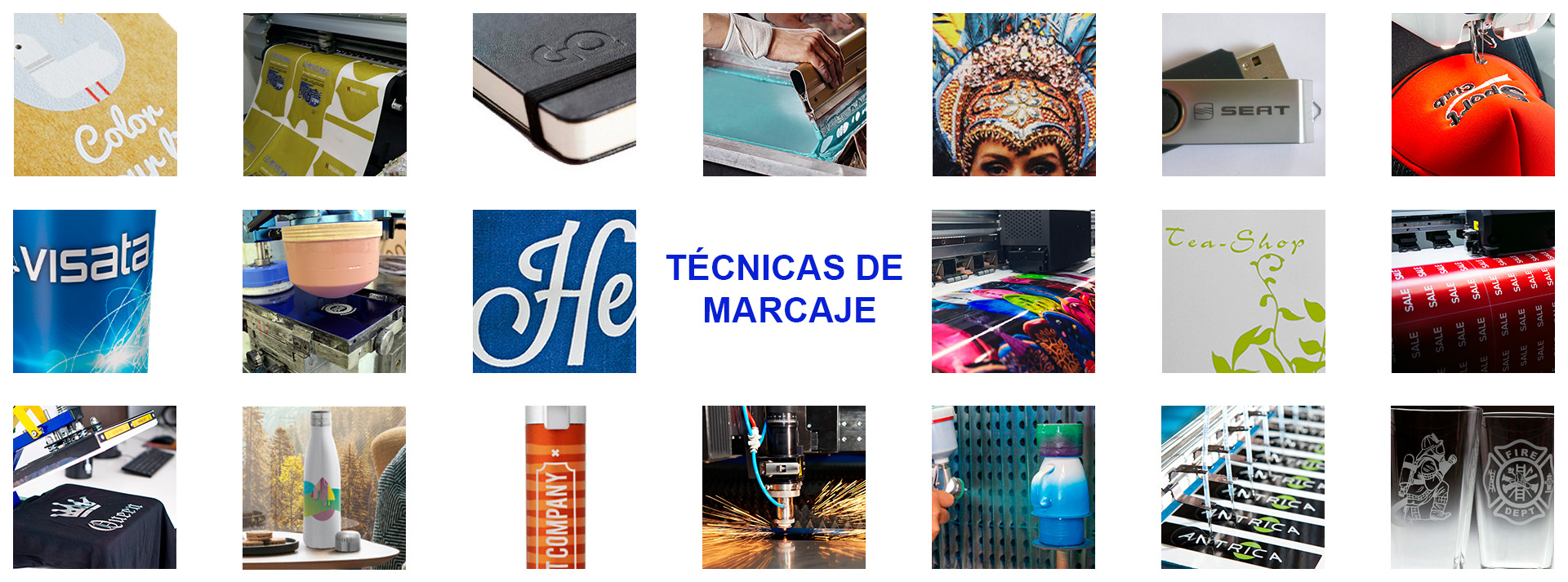
 DIGITAL TRANSFER
Digital transfer printing is ideal for digitally marking small quantities with no color limitations. It can be applied to products such as document holders, backpacks, non-woven bags, cork products, and soccer balls.
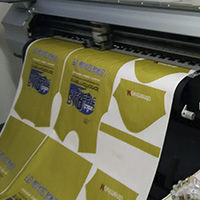
 EMBROIDERY
Traditional embroidery techniques allow for the personalization of various types of fabrics with a high-quality finish. This customization technique is also highly durable and is based primarily on embroidering the chosen design with threads of different colors. The cost of this technique depends on the surface area in square centimeters to be embroidered.
Embroidery is mainly used on caps, t-shirts, polo shirts, blankets, towels and all kinds of textile products.
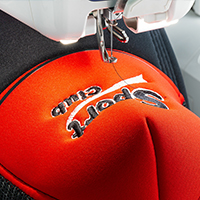
 HOT STAMPING
Hot Stamping is a technique that consists of marking a logo or text in bas-relief.
The design is created in reverse on metal and reproduced using a hot press on leather, faux leather, and some plastic products. This technique combines pressure with temperature and time. It doesn't allow for ink, but a metallic color can be applied to the mold, adding color to the product's personalization. The most commonly used color is silver.
The finishes are defined and very elegant, so it is often used in promotional products such as diaries, folders, notepads, wallets…
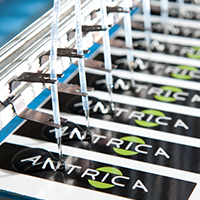 DOMING OR DROP OF RESIN
Doming, also known as resin doming in Spain, is a marking technique that combines printing a design onto a plastic or paper base and applying a layer of resin (epoxy) that encapsulates the design, acting as a protective layer. The result is a 3D effect that adds depth and protection, and provides a glossy, durable, and long-lasting finish.
There are no color limitations for the design and it is commonly used on USB drives, keychains, pens, pins, magnets or yo-yo lanyards.
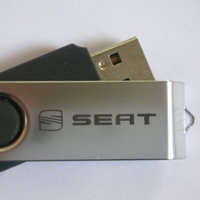 LASER
LASER
Laser engraving is one of the most precise and durable marking techniques available. A computer-guided laser beam is projected onto the product's surface, etching the design in low relief. The result is crisp and elegant.
The most suitable materials for this customization technique are metal, wood, or glass.
This technique is commonly used on keychains, pens, and USB drives.
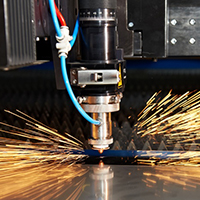 360° CIRCULAR LASER
It's a laser engraving technique optimized for 360° application around a product. It's ideal for pens and products like glasses, bottles, and jerrycans.
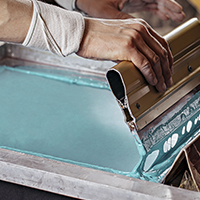 SCREEN PRINTING
Screen printing is one of the most widely used techniques because it allows for the printing of up to six spot colors, depending on the product, and provides durable and reliable results. This technique is applied to smooth surfaces, achieving high image definition.
Screen printing involves transferring the design to a screen (polyester or nylon mesh) coated with a photosensitive layer that reacts to ultraviolet light. This light hardens the areas that will not be printed, leaving the design free for the ink to pass through.
This technique is commonly used on textile, plastic, wooden or aluminum items such as t-shirts, bags, drums, notepads, backpacks, caps…
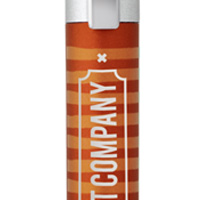 CIRCULAR SCREEN PRINTING
Circular screen printing is the same technique as traditional screen printing, but it's applied in a 360° circle. It's a more expensive technique than flat screen printing, but it allows for printing on a larger surface area of a cylindrical item such as a drum, bottle, or pen.
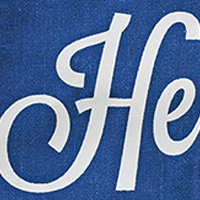 TEXTILE SCREEN PRINTING
Textile screen printing is the same screen printing process, but optimized for application on fabrics. It is used on promotional products such as aprons, fleece fabrics (sweaters, vests, etc.), non-woven bags, and more.
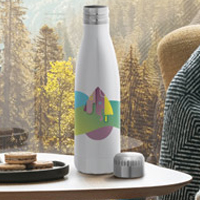 SUBLIMATION
Sublimation is a complex marking technique that does not limit the number of colors in the design but can only be applied to a product specially made for it and whose base is white.
It's a complex technique because it involves changing the state of the sublimation ink from solid to gas through the application of heat. The resulting print is sharp, high-quality, and highly resistant to extreme temperatures.
Sublimation allows for the reproduction of full-color photographs with exceptional quality, making customization possibilities virtually endless. It's commonly used on textile products such as t-shirts, bandanas, cushions, and bags, but also on mouse pads, umbrellas, and mugs.
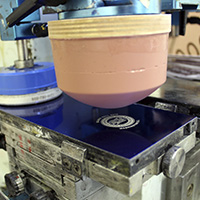 PAD PRINTING
Pad printing is a printing process that involves printing your design in relief on a flat plate. Ink is applied evenly to the plate, and a silicone pad presses onto the surface, creating a perfect transfer for printing onto your product. It can be done with one or more spot colors. It's primarily used for small items such as pens, USB drives, keychains, lighters, etc., and is the most economical solution for various products.
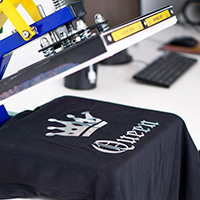 SCREEN PRINTING TRANSFER
Screen printing transfer is a technique similar to screen printing. The difference is that instead of transferring the ink directly onto the product, it is first printed onto transfer paper. This transfer paper is then applied to the product using a heat press.
The advantage of this technique is that it allows four-color printing (screen printing only allows the application of flat inks) and very uniform results are obtained.
It is suitable for small quantities of textile products. It is commonly used for gifts such as document holders, backpacks, non-woven bags, cork products, soccer balls, etc.
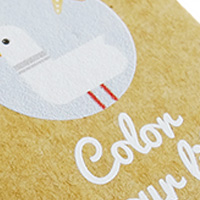 UV DIGITAL
Digital UV printing is a digital printing technique that uses inks that dry instantly when exposed to UV light.
The result is exceptional definition, sharpness, quality, and durability of the marking, resistant to sun and water. Furthermore, varnishes and white inks can be used to create striking effects.
This marking technique has many printing applications: aluminum, wood, glass, acrylic, PVC, and more. In promotional gifts, it's commonly used for pens, keychains, rulers, and notepads.
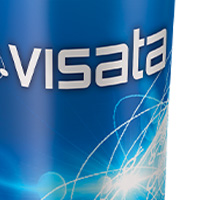 360º Circular UV
Circular UV printing is the same technique as digital UV but optimized for 360° printing.
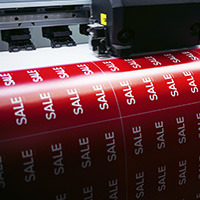 DIGITAL ADHESIVES
Digital printing on photo-quality vinyl stickers in a wide variety of shapes. This technique allows for four-color printing.
 FIRING OR VITRIFIABLE SCREEN PRINTING
Firing is a technique that uses special oven-bake paints. It's ideal for glass, ceramics, or porcelain, allowing for complex and highly detailed logos.
There are 2 vitrifiable screen printing options:
- Low-temperature baking, for customizations of up to 10 colors
- High-temperature firing for greater durability, ideal for black and white customizations
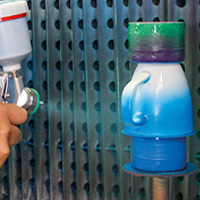 HYDROGLAZING
Hydroglazing is a technique that involves spraying any Pantone color, with a matte or glossy finish, onto glass, ceramic, or porcelain. It's ideal for mugs, glasses, or bottles.
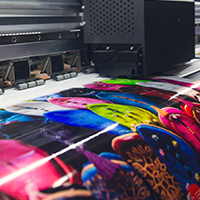 DIGITAL PRINTING
Digital printing is the most modern of all marking techniques. It allows printing directly onto garments or paper using specialized printers. No screens or drying are required, and the results are high quality. It allows for printing full-color gradients or photographs. It is a widely used technique for labels and pins.
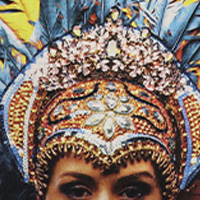 DIRECT TO GARMENT
Direct to Garment, or direct digital printing on textiles, is a full-color printing for textiles, ideal for small quantities.
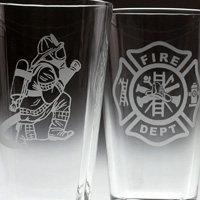 SANDBLASTING
Sandblasting, using a jet of sand, allows you to create a 3D effect with a high level of detail. This technique is ideal for glass, ceramics, or porcelain.
- 25/03/2026
Share on


